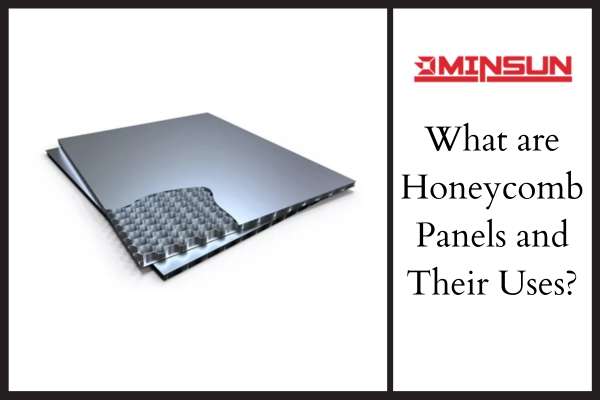
Honeycomb panels have emerged as a revolutionary building material, offering unparalleled versatility and a wide range of applications across various industries. Let's explore the world of honeycomb panels to understand their composition, construction, and the myriad ways they are utilized.
Honeycomb panels are engineered structures characterized by a core composed of hexagonal or square cells, reminiscent of a beehive, sandwiched between two thin layers, typically made of metals like aluminum, plastics, or composite materials.
The core of honeycomb panels is crafted from lightweight yet robust materials such as aluminum, fiberglass, or Nomex aramid fiber. This core is meticulously constructed to ensure uniform cell size and distribution, optimizing strength and stability while minimizing weight.
Despite their lightweight nature, honeycomb panels boast impressive strength and rigidity. The hexagonal or square cell structure efficiently distributes stress across the panel, enhancing its load-bearing capacity and resistance to bending, torsion, and compression.
Honeycomb panels are used extensively across diverse industries thanks to their exceptional properties and adaptability to various applications.
In aerospace engineering, where every ounce matters, honeycomb panels are indispensable. These panels are utilized in aircraft interiors, flooring, and structural components to achieve significant weight savings without compromising safety or performance. Their lightweight construction contributes to fuel efficiency and enhances aircraft maneuverability.
Architects and designers favor honeycomb panels for their aesthetic appeal, durability, and thermal insulation properties. These panels are employed in façade cladding, interior partitions, furniture, and decorative elements, offering endless design possibilities while ensuring structural integrity and energy efficiency.
Honeycomb panels play a crucial role in vehicle manufacturing in the automotive and marine industries. They are used in car interiors, boat hulls, and cargo containers, where their lightweight construction helps improve fuel efficiency and increase payload capacity. Additionally, their high strength-to-weight ratio enhances vehicle performance and durability.
Honeycomb panels find applications in various industrial settings, including manufacturing equipment, machinery enclosures, and acoustic panels. Their exceptional vibration-damping properties and sound insulation capabilities make them ideal for reducing noise pollution in factories and industrial facilities, creating safer and more comfortable working environments.
One of the most significant advantages of honeycomb panels is their lightweight construction. Compared to solid materials, honeycomb panels offer substantial weight savings, making them ideal for applications where weight reduction is critical, such as aerospace and transportation.
Despite being lightweight, honeycomb panels exhibit exceptional strength and rigidity. Their high strength-to-weight ratio ensures structural integrity while minimizing overall weight, allowing for efficient load-bearing capabilities without sacrificing performance or safety.
Honeycomb panels provide effective thermal insulation, helping maintain comfortable indoor temperatures and reducing energy consumption. This makes them a sustainable choice for building envelopes and HVAC systems, contributing to energy efficiency and environmental conservation.
Honeycomb panels offer extensive customization options to suit specific project requirements. They are available in a wide range of materials, sizes, and configurations. Designers can choose the core material, surface finish, and other parameters, allowing for tailored solutions that meet the unique needs of each application.
Honeycomb panels represent a cutting-edge solution with limitless potential across various industries. Their lightweight construction, exceptional strength, and versatility make them indispensable in the aerospace, construction, transportation, and industrial sectors. As technology advances and innovations emerge, the utilization of honeycomb panels is expected to grow, driving further advancements in engineering, design, and sustainability.