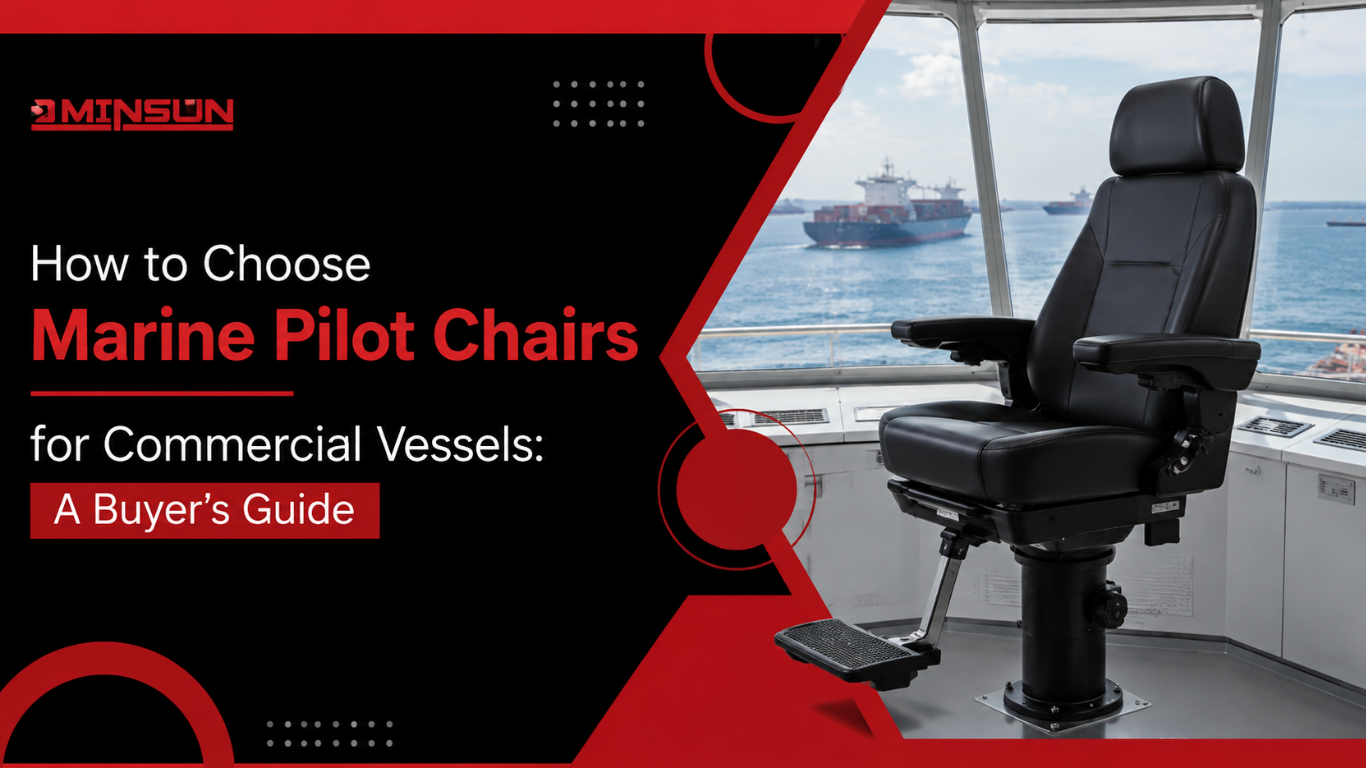
Marine pilot chairs cost $800 to $6,000+ each and can cut transmitted vibration by 30-50 percent, as well as allowing the operator to work shifts of 8-12 hours. It outlines the impact of materials, suspension systems, certifications, ergonomics, maintenance needs, and selecting a quality pilot chair exporter on durability, crew comfort, and overall operating expenses.
A pilot chair isn't just a seat. In a commercial vessel, it's the place where the helmsman or captain takes 8 to 12 hours of sleep a day or more for long-haul voyages. If it doesn't go exactly right, you get tired really quickly. When correctly done, it helps posture, absorbs shock, and lasts for years of continual vibration and years of salt exposure. Fleet operators with several units should also enjoy consistent performance across all their bridges, making the sourcing decision even more critical. This guide addresses the important points when deciding on a marine pilot chair, from materials to certifications to working with a solid pilot chair exporter.
Bridge crew fatigue is truly a safety issue. Research on marine seating correlates poor seating with longer watch reaction times and reduced alertness. This is partly because a chair does not properly support the spine during an 8-hour shift.
Vibration is another reason. If a chair lacks a suspension system, low-frequency vibrations (2- 20 Hz) from commercial vessels can cause discomfort and long-term musculoskeletal strain.
The cost of a budget pilot chair may be 30–40 percent lower at purchase. Cheap foam compresses quickly and usually loses 20 percent of its ability to cushion within 12 to 18 months with daily usage. Changing chairs every year is more expensive than buying a long-lasting piece from the beginning!
The longevity, comfort, and resistance to marine environments are also related to the choice of material. A few materials are consistently found in high-quality pilot chairs.
Marine vinyl will withstand saltwater, UV, and mildew much better than standard upholstery. Good quality vinyl will have UV resistance that will last for 3 to 5 years of outdoor exposure.
The density of the foam is more important than its thickness. Choose Foam with 45 to 65 kg per cubic meter. Higher density foam compresses less with use, and continues to provide support for thousands of hours.
Select a frame material that is corrosion-resistant in a salty environment. Marine hardware is usually made from 316 Grade stainless steel, which is more corrosion-resistant than 304 Grade steel, especially in salt spray areas.
Check compliance with ISO 9096 or other maritime seating standards, and for Europe, CE marking. Some chairs even have a classification society conformance such as DNV or Lloyd's Register, which indicates that they are structurally sound and safe for commercial vessel operations.
Good chairs can minimize the transmission of vibration by 30 to 50%, compared to fixed, unsuspended chairs. This is done by a pneumatic or spring suspension system that absorbs vibrations of 2 to 20 Hz that typically occur on a commercial vessel.
Suspension design allows differentiation from basic seats and true marine pilot seats, designed for rough surfaces.
Air-filled cylinders are used in pneumatic systems to absorb shock. The chair's air pressure can be adjusted to make sure that the shock absorption is equally good for operators ranging in weight from 50 to 150 kg.
Spring-based systems typically cost between 15 and 25 percent less than pneumatic systems but may not offer the same control precision. They maintain acceptable performance in moderate vibration conditions such as calmer coastal vessels.
More expensive chairs come with damping adjustment dials, allowing the operator to fine-tune the shock response as per sea conditions. This typically increases the chair price by 10-15 percent but helps to make the chair much more comfortable to operate through rough weather.
A pilot chair must be accommodating in design, as the crew will vary between shifts and between vessels. The level of adjustability is directly related to long-term ergonomic health and comfort.
A minimum adjustment range of 15 to 20 cm is needed so that operators who are 160-195 cm tall can operate the chair with a uniform line of sight to the instruments and windows.
A good chair has an adjustable chair back that can recline up to 15-20 degrees and provides adjustable lumbar support. This combination helps minimize lower back strain during long hours of watching, much more than fixed-back designs.
Armrests should be adjustable in both arm length and height, typically in the range of 5 to 8 centimeters. It depends on arm length and working posture at the helm console.
The type of chair mounting can impact safety and usability while operating a vessel.
Most bridge pilot chairs have swivel bases that enable the chair to rotate 360 degrees and move rapidly between windows and instrument panels. Locking mechanisms need to keep the chair firmly held at intervals of about 15 to 30 degrees apart to avoid unnecessary motion in rough weather.
Mounting bolts and base plates must meet the standards of the vessel deck, sometimes a particular bolt pattern and load rating. A good chair will be capable of supporting a static load of 150 kg and safety margins as outlined by the manufacturer's load test documentation.
To import marine pilot chairs from overseas, you need a pilot chair exporter with the knowledge and expertise required in production quality and shipping bulky, specialized seating equipment.
Ask about lead times, typically 4-10 weeks based on order size and order customization. Request foam density, frame grade, and manufacturer classifications and approvals.
Pilot chairs can be quite large and may need sea freight for bulk procurement orders. A quality pilot chair exporter provides proper crating to prevent damage and moisture protection for longer transit, often 3-6 weeks for cross-country sea shipments.
Depending on the exporter, the volume of pilot chairs is usually about 5-10 units at the minimum order quantity. For custom configurations, MOQs may be increased (e.g., 20 units or more), depending on your situation, to offset the costs of tooling and material sourcing changes.
Consistency is a must in fleet operations, making customization a popular objective for fleet operators collaborating with a pilot chair exporter.
Fleet operators often ask for the same colors for their custom upholstery and for their logos to be embroidered on the different vessels in their fleet. This generally increases the base unit price by 5-10 percent.
Certain vessels have custom layouts on the bridge where the height and mounting details must be different. Customization typically increases lead times by 2-4 weeks over normal configurations.
The pricing will vary depending on materials, suspension type, and certification level.
If it is a basic pilot chair with mechanical suspension and standard vinyl upholstery, the price will usually be in the $800 – $1,500 range per unit. These are suitable for smaller-scale commercial vessels when vibration exposure is moderate.
The average price for a chair based on pneumatic suspension, high-density foam, and marine-grade upholstery is $1,500 to $3,000 per chair. This range is designed for most standard commercial vessel requirements.
These fully adjustable chairs also have classification society approval, advanced damping controls, and high-quality materials and can cost $3,000-$6,000 or higher, normally found on larger offshore and commercial vessels.
All good chairs require proper maintenance for a year of use.
Generally, pneumatic suspension systems should be inspected for pressure and new seals every 6 months to a year. If this maintenance is not performed, over time the shock absorption efficiency drops by 15 to 20 percent.
Use manufacturer-recommended products to clean upholstery designed for marine use to prevent degradation of any UV coatings. Check stitching and seams for wear or tear every 6 months, particularly in the bridge chairs that are used the most.
Quality claims are important, especially for bulk orders sent overseas. The following checks confirm whether a chair does what its name implies.
Quality manufacturers fatigue-test, cycling the suspension and compression system back and forth for thousands of cycles, even 50,000, to simulate years of use. This data will tell you more about the product's durability over time than any showroom sit test, so request it before committing to a sizable order.
A salt spray test (ASTM B117) is recommended for frame and hardware items exposed to a controlled solvent fog environment for 96 to 500 hours, depending on the grade. Chairs that have more satisfactory test durations will tend to last longer under real offshore conditions.
If the amount ordered is over 20, it is good to order a sample chair before placing the order. This allows buyers to experience stitching quality, foam firmness, and smoother suspension upfront, instead of on spec sheets and photos alone.
The type of vessel will help determine which features carry the highest weight, as there is significant variation in operating conditions within commercial applications.
These vessels work in harsher conditions and have extended shifts, typically 12 hours. Pneumatic suspension with adjustable damping comes into its element here, as do load ratings that exceed as operators load more gear.
Less stressful conditions in coastal waters, coupled with the shorter distances involved, allow for the use of mid-range chairs that continue to satisfy basic ergonomic and safety needs and do not have the added luxury of suspension.
Cargo vessels travel long distances, so the crew has to work long hours over multi-week voyages. Durability is paramount here, with 316-grade stainless frames and high-density foam for continuous use for several months at sea.
When selecting a marine pilot chair for commercial vessels, material properties, suspension, and adjustability are important considerations. A trustworthy pilot chair exporter can help confirm with actual documentation. Having time for comparison minimizes the future risk to operations and crews.
Which is the best place to purchase wholesale Marine Pilot Chairs for a retail store?
Pilot chair exporters are the best place to purchase bulk orders, as they have material specifications and classification society documentation. Before ordering large quantities, always check the foam density and frame grade.
How to buy marine pilot chairs in wholesale at affordable rates?
Shop around to see what a few reputable exporters charge, and discuss prices for bigger fleet orders. A per-unit savings of 10-15% is usual when there are 10 or more orders.
Where can I find a pilot chair exporter who also offers customization?
Search for exporters that specify custom upholstery, branding, or frame dimension options right on the product page. These services are available from marine seating manufacturers for arranging orders in bulk.
Do any pilot chair exporters provide bulk supply with customization, and at low prices?
Yes, some exporters offer bulk pricing with options such as upholstery colors, embroidery branding, and mounting configurations. It's better to inquire specifically about minimums for such custom orders.
What's the expected lifespan for marine pilot seats?
When it is properly suspended and upholstered, a well-built pilot chair will last 8-12 years. If conditions are similar and use is also heavy, lower-quality chairs could require replacement in 2 to 3 years.